Keeping cryptocurrency safe is just as important as choosing which coins to buy. A wallet connected to the internet makes sending and receiving crypto convenient, but it can also expose your funds to online threats. An offline wallet provides another level of protection, although it comes with its own responsibilities. So, which option should you choose: a hot wallet or a cold wallet? This guide explains their differences, security features, costs, and practical uses so you can protect your cryptocurrency more confidently.
Imagine purchasing Bitcoin, Ethereum, or another cryptocurrency and watching its value grow over time.
You might carefully research the market, compare exchanges, and spend hours choosing the right digital asset.
But there is one decision that can be just as important as the purchase itself: where will you keep your cryptocurrency?
Some people leave their assets on an exchange because it makes trading easier. Others transfer their funds into mobile wallets, while long-term holders often consider dedicated hardware devices.
These choices are not simply about convenience. They determine how your wallet keys are stored, how transactions are authorized, and how vulnerable your assets may be to different types of attacks.
Two common storage options dominate this discussion: hot wallets and cold wallets.
Both allow you to manage cryptocurrency, but their security models are different.
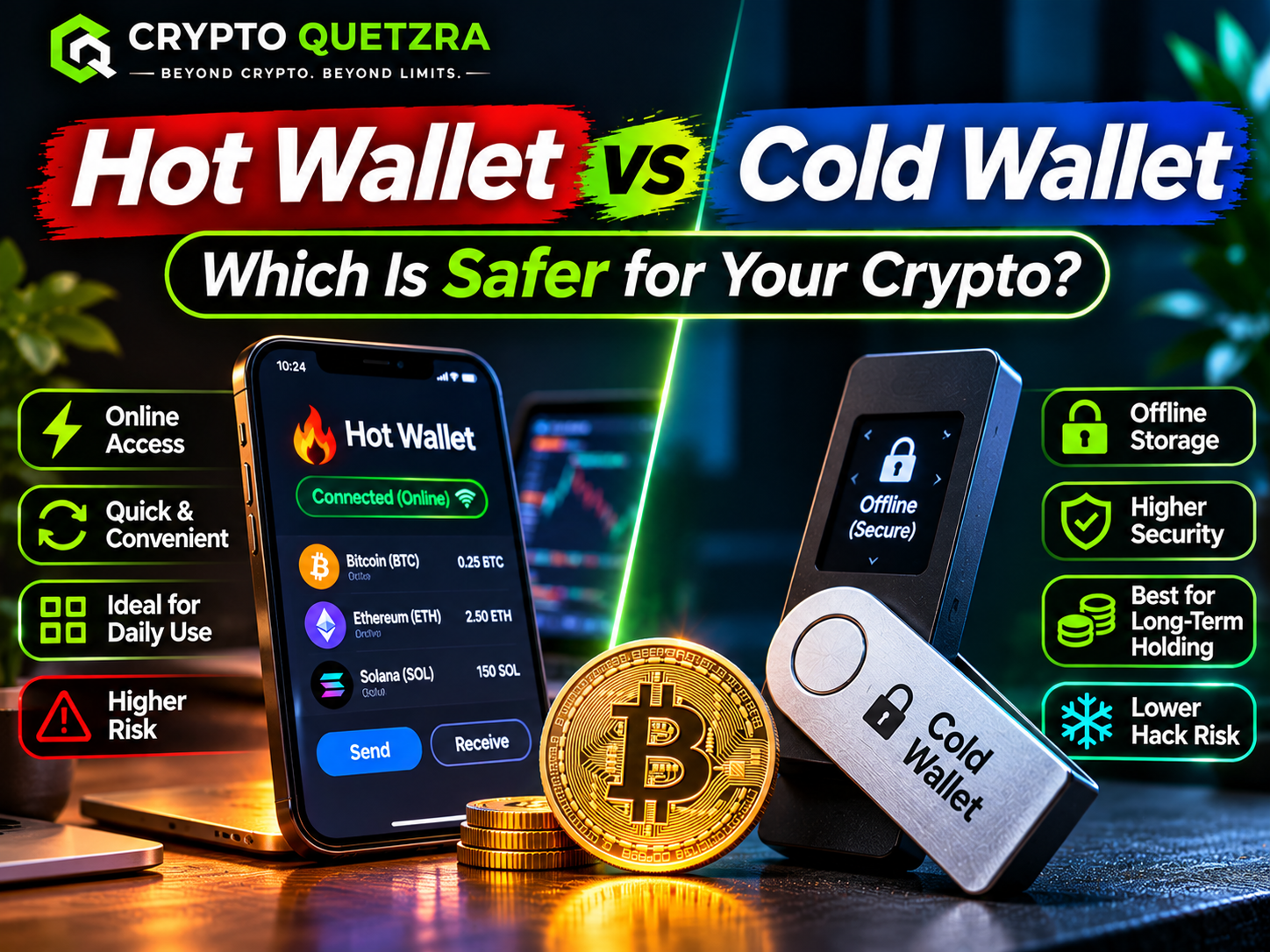
A hot wallet prioritizes accessibility, while a cold wallet is designed to keep the keys needed to authorize transactions away from internet-connected environments.
Neither option is completely risk-free.
Understanding how each works can help you choose a storage method that matches the amount of cryptocurrency you own, how frequently you use it, and your ability to manage security.
1. What Is a Crypto Wallet and What Does It Actually Store?
Before comparing hot and cold wallets, it is important to understand what a cryptocurrency wallet really does.
A common misconception is that a wallet physically stores Bitcoin or Ethereum.
It does not.
Your cryptocurrency exists as records on its respective blockchain. A wallet manages the cryptographic keys that allow you to access and authorize transactions involving those assets.
A wallet generally works with two important types of information.
Public Address
A public address is the destination other people can use to send cryptocurrency to you.
You can share a receiving address when someone needs to transfer supported digital assets into your wallet.
However, always check that the address belongs to the correct cryptocurrency network.
For example, sending an asset using an incompatible network or to an incorrect destination can result in permanent loss.
Private Key
A private key is a secret cryptographic credential used to authorize transactions.
Anyone who obtains the necessary private key may be able to control the associated cryptocurrency.
That is why keeping private keys secure is one of the most important responsibilities of cryptocurrency ownership.
Recovery Phrase
Many modern wallets provide a recovery phrase when they are created.
It is usually a sequence of 12 or 24 words, depending on the wallet and its backup standard.
This phrase can allow you to restore wallet access when a device is lost, damaged, or replaced.
However, it must be treated as highly sensitive information.
Anyone who obtains a valid recovery phrase may be able to restore the wallet and access its funds.
Never share it with customer support representatives, strangers, or websites claiming to help recover your cryptocurrency.
2. What Is a Hot Wallet?
A hot wallet is a cryptocurrency wallet whose private-key management system is connected to the internet or operates through an internet-connected device.
These wallets are commonly available as mobile applications, desktop software, browser extensions, or online services.
Their main advantage is convenience.
You can open a wallet, check your cryptocurrency balance, connect to supported applications, and authorize transactions without handling a separate offline device every time.
Hot wallets are especially useful for people who interact with cryptocurrency regularly.
How Does a Hot Wallet Work?
Imagine installing a cryptocurrency wallet application on your smartphone.
During setup, the wallet generates the necessary cryptographic keys and provides a recovery phrase.
The application uses those keys to manage your cryptocurrency addresses and authorize transactions.
When you want to send Bitcoin or another supported cryptocurrency, the wallet creates and signs a transaction using the required private key.
The signed transaction is then broadcast to the relevant blockchain network.
The process is convenient because everything happens through an application connected to the internet.
However, this connectivity also creates potential attack opportunities.
If your smartphone or computer becomes infected with malware, or you accidentally approve a malicious transaction, your cryptocurrency may be at risk.
Common Types of Hot Wallets
1. Mobile Wallets
These are applications installed on smartphones.
They are useful for everyday transactions, checking balances, and accessing supported decentralized applications.
Examples include MetaMask Mobile, Trust Wallet, and Exodus Mobile.
2. Desktop Wallets
These wallets are installed directly on computers.
They can offer useful features for managing cryptocurrency from a desktop environment.
However, a compromised computer may expose sensitive wallet information or interfere with transactions.
3. Browser Extension Wallets
Browser wallets allow users to connect directly with decentralized applications.
MetaMask is a well-known example.
These wallets are frequently used for DeFi, NFT platforms, blockchain games, and other Web3 services.
Their convenience also makes it important to examine the websites and transaction permissions you approve.
4. Web-Based Wallets
Some wallet services are accessible through a web browser.
Depending on the service, the provider may control the private keys, or the user may retain control through a self-custody arrangement.
It is essential to understand the custody model rather than assuming all online wallets work the same way.
3. Advantages of Hot Wallets
Hot wallets remain popular because they make cryptocurrency easier to use.
Here are their main advantages.
Easy Access to Cryptocurrency
You can check your balances and manage supported assets through a smartphone or computer.
There is no need to connect a separate hardware device for every ordinary wallet interaction.
Convenient for Everyday Transactions
Hot wallets are suitable for users who regularly send, receive, exchange, or use cryptocurrency.
For example, someone making frequent payments may prefer the convenience of a mobile wallet.
Quick Interaction With Web3 Applications
Browser and mobile wallets can connect with decentralized exchanges, NFT marketplaces, DeFi applications, and blockchain-based services.
This makes them particularly useful for people who actively participate in the cryptocurrency ecosystem.
Usually Less Expensive to Start
Many software wallets are available without purchasing dedicated hardware.
However, blockchain transaction fees may still apply when sending cryptocurrency or interacting with decentralized applications.
Suitable for Smaller Balances
Keeping a limited amount in a hot wallet can be practical when you need quick access to cryptocurrency.
It is similar to keeping a small amount of cash available for everyday spending while storing larger savings separately.
4. Disadvantages and Security Risks of Hot Wallets
Convenience comes with additional responsibilities.
Because hot wallets operate through internet-connected devices or services, they may be exposed to threats that target online accounts, software, and user behavior.
Malware and Malicious Software
A compromised computer or smartphone can expose wallet information or interfere with cryptocurrency transactions.
Some malware specifically targets cryptocurrency users by monitoring clipboard activity, replacing copied wallet addresses, or attempting to obtain sensitive information.
Phishing Attacks
A phishing website may imitate a legitimate wallet provider or decentralized application.
The attacker tries to persuade the user to enter a recovery phrase, connect a wallet, or approve a malicious transaction.
A professional-looking website does not prove that it is legitimate.
Malicious Transaction Approvals
Some decentralized applications request permission to interact with tokens held in your wallet.
An unsafe approval can give a malicious contract more access than you intended.
Always understand what a transaction or token approval will authorize before signing it.
Device Theft or Unauthorized Access
If your smartphone or computer is stolen and insufficiently protected, someone may attempt to access your wallet.
Use device encryption, strong authentication, automatic locking, and reputable wallet software.
Exchange Security Problems
If your cryptocurrency is held in an exchange account rather than a self-custody wallet, you also depend on the exchange’s internal security and operational controls.
An exchange account is not automatically equivalent to controlling your own private keys.
This distinction matters when deciding where to keep larger cryptocurrency holdings.
5. What Is a Cold Wallet?
A cold wallet is a cryptocurrency wallet whose private keys are kept offline rather than continuously exposed to an internet-connected environment.
The most familiar example is a hardware wallet.
These devices are designed to protect private keys and allow transactions to be signed without exposing those keys to an ordinary internet-connected computer or smartphone.
Cold storage is commonly used by people who want to hold cryptocurrency for an extended period and do not need to access it constantly.
The purpose is straightforward: reduce the opportunity for remote attackers to obtain the keys required to authorize transactions.
However, offline storage does not remove every security risk.
A cold wallet can still be lost, stolen, damaged, initialized incorrectly, or compromised through a fraudulent recovery process.
How Does a Cold Wallet Work?
Imagine purchasing a hardware wallet and setting it up using its official instructions.
The device generates or manages your private keys internally.
You receive a recovery phrase that can help restore wallet access if the device is lost or damaged.
When you want to send cryptocurrency, your wallet software prepares the transaction and communicates the relevant information to the hardware device.
You review and approve the transaction on the device itself.
The hardware wallet signs the transaction internally, without revealing the private key to the connected computer.
The signed transaction can then be broadcast to the blockchain network.
This separation between transaction preparation and private-key signing is one of the main security advantages of hardware wallets.
The device may be connected temporarily to a computer or phone, but the private keys should remain protected inside its secure environment.
6. Common Types of Cold Wallets
Cold storage can take several forms.
1. Hardware Wallets
Hardware wallets are dedicated physical devices designed to manage cryptocurrency keys.
Examples include:
- Ledger hardware wallets.
- Trezor hardware wallets.
- Keystone hardware wallets.
- Coldcard hardware wallets.
Different products support different cryptocurrencies, networks, signing methods, and security features.
Before purchasing, check the exact model’s supported assets and whether its signing process fits your requirements.
2. Air-Gapped Wallets
An air-gapped setup keeps the signing device physically disconnected from ordinary network connections.
Depending on the design, transaction information may be transferred using QR codes or removable media.
This approach can reduce exposure to online attacks, but it requires careful setup and transaction verification.
3. Paper Wallets
A paper wallet traditionally refers to private-key or recovery information written or printed on paper.
Although paper can be stored offline, creating and managing paper wallets incorrectly can introduce serious risks.
For example, using an infected computer to generate keys or storing unencrypted information carelessly may expose funds.
Modern hardware wallets generally provide a more practical option for most individuals.
4. Offline Computer Wallets
Some advanced users create wallet systems on dedicated computers that remain disconnected from the internet.
Transactions can be prepared on an online device, transferred to the offline system for signing, and then broadcast using the connected device.
This method offers flexibility but requires technical knowledge and careful operational security.
7. Advantages of Cold Wallets
Cold wallets are particularly useful when cryptocurrency needs to be stored for longer periods.
Better Protection Against Many Online Attacks
Because private keys remain offline, ordinary remote malware and phishing attacks have fewer opportunities to access them directly.
A hardware wallet can also isolate transaction signing from a potentially compromised computer.
Greater Control Over Private Keys
With a properly configured self-custody hardware wallet, you control the cryptographic credentials associated with your cryptocurrency.
You do not have to depend entirely on a centralized exchange to authorize transactions.
Suitable for Long-Term Storage
If you do not plan to move your cryptocurrency frequently, the reduced online exposure can be worth the additional setup and handling requirements.
Transaction Verification on the Device
Many hardware wallets display transaction details on their own screens.
This allows users to review important information before approving a transaction.
You should always check the destination address, network, and amount using the hardware wallet’s trusted display.
Protection When a Connected Computer Is Compromised
A computer infected with malware may attempt to manipulate transaction information or steal sensitive data.
A correctly configured hardware wallet can reduce the likelihood that malware obtains the private keys because the keys are not exposed to the computer.
However, the user can still be tricked into approving an incorrect transaction.
8. Disadvantages and Risks of Cold Wallets
Offline storage improves certain aspects of security, but it introduces other responsibilities.
Physical Loss or Damage
A hardware wallet can be misplaced, stolen, damaged, or become unusable.
If you have not created a reliable backup, losing access to the device can result in permanent loss of cryptocurrency access.
Recovery Phrase Management
Your hardware device is not the only thing that matters.
The recovery phrase is often the most important part of your backup arrangement.
If someone steals it, they may be able to restore your wallet without having the original hardware device.
If you lose it and the device becomes inaccessible, you may lose your ability to recover the wallet.
Less Convenient for Frequent Transactions
Using cold storage involves additional steps.
You may need to connect a device, review transaction information, physically approve it, and wait for the transaction to be broadcast and confirmed.
This may be inconvenient for someone who trades or spends cryptocurrency throughout the day.
Upfront Equipment Cost
Unlike many software wallets, hardware wallets require a physical purchase.
Prices vary depending on the manufacturer, model, features, and supported networks.
Supply-Chain and Fake Device Risks
Buying hardware wallets from unknown sellers or unofficial marketplaces can expose you to tampered devices, fraudulent recovery phrases, or counterfeit products.
Purchase directly from the manufacturer’s official website or an authorized reseller whenever possible.
Follow the manufacturer’s security instructions when initializing the device.
9. Hot Wallet vs Cold Wallet: Complete Comparison
Now that you understand how both options work, let’s compare them directly.
| Feature | Hot Wallet | Cold Wallet |
|---|---|---|
| Internet connectivity | Connected or online-accessible | Private keys kept offline |
| Main purpose | Frequent transactions | Secure long-term storage |
| Convenience | High | Lower |
| Remote attack exposure | Generally higher | Generally lower |
| Hardware requirement | Usually smartphone or computer | Usually dedicated hardware or offline setup |
| Initial cost | Often free | Hardware usually costs money |
| Transaction approval | Through connected software | Signed using the offline key environment |
| Recovery phrase | Commonly used | Commonly used |
| Physical theft risk | Device-related | Device and backup-related |
| Best suited for | Everyday cryptocurrency use | Longer-term holdings |
The most important difference is how accessible the private keys are to internet-connected environments.
A cold wallet generally reduces online exposure, while a hot wallet offers greater convenience.
Neither guarantees complete protection against theft, loss, or mistakes.
10. Which Wallet Is Safer for Bitcoin and Ethereum?
Both Bitcoin and Ethereum can be managed using compatible hot and cold wallets.
However, selecting a wallet requires paying attention to the specific cryptocurrency and network you intend to use.
Bitcoin Storage
Bitcoin users can choose from mobile wallets, desktop wallets, hardware wallets, and other self-custody arrangements.
A mobile wallet may be convenient for smaller transactions, while a hardware wallet can provide a better storage arrangement for larger long-term holdings.
Before sending BTC, confirm that your wallet supports the correct Bitcoin network and address format.
Ethereum Storage
Ethereum users also have access to browser wallets, mobile wallets, desktop wallets, and hardware devices.
Ethereum wallets can interact with smart contracts, decentralized exchanges, NFTs, and other applications.
This creates an additional security consideration.
When interacting with a decentralized application, you may be asked to approve token spending or sign a transaction containing complex information.
Read the approval carefully and understand the permissions being granted.
A hardware wallet can protect your private keys, but it cannot automatically determine whether a smart contract or transaction is malicious.
The user must still verify what they are signing.
11. Hot Wallet vs Cold Wallet: Which One Should Beginners Choose?
The answer depends on how you use cryptocurrency.
A beginner who makes frequent payments, trades occasionally, or explores decentralized applications may find a hot wallet easier to manage.
Someone who plans to hold cryptocurrency for months or years may prefer cold storage.
However, a beginner should also consider their ability to manage backups and protect recovery information.
Here are three common situations.
Scenario 1: You Are Just Starting With Crypto
Suppose you recently purchased a small amount of Bitcoin and want to understand how wallets work.
A reputable mobile wallet may provide a convenient way to learn how receiving addresses, sending transactions, and transaction confirmations work.
Keep the balance limited while you become familiar with wallet security.
Scenario 2: You Hold Cryptocurrency for the Long Term
Imagine that you have purchased Bitcoin or Ethereum and do not intend to spend it regularly.
A properly configured hardware wallet may be more suitable because the keys are kept away from continuously connected devices.
Create a secure recovery backup before transferring a significant balance.
Scenario 3: You Regularly Trade or Use DeFi
If you frequently interact with decentralized applications, a hot wallet can provide easier access.
However, consider using a separate wallet for higher-risk activities instead of connecting your main long-term storage wallet to every website.
This separation can help limit the damage if you accidentally approve a malicious transaction or interact with a compromised application.
12. Why Using Both Hot and Cold Wallets Can Be a Better Strategy
There is no requirement to use only one wallet.
In fact, many cryptocurrency users benefit from separating their daily-use funds from their long-term holdings.
Think of it like managing money in traditional finance.
You might keep a smaller amount in your everyday wallet while storing the majority of your savings in a more secure location.
The same approach can work with cryptocurrency.
A Practical Two-Wallet Setup
Hot Wallet: Everyday Transactions
Use a software wallet for:
- Small cryptocurrency payments.
- Regular transfers.
- Decentralized application interactions.
- Smaller trading balances.
- Testing new blockchain services.
Cold Wallet: Long-Term Storage
Use a hardware wallet or suitable offline setup for:
- Long-term Bitcoin holdings.
- Ethereum held for extended periods.
- Cryptocurrency savings that do not need frequent access.
- Assets you do not intend to use for daily transactions.
This arrangement separates convenience from long-term security.
It also reduces the need to expose your main storage wallet to every website or decentralized application you visit.
Remember that the exact allocation should depend on your individual circumstances, not an arbitrary percentage promoted online.
13. How to Protect Your Crypto Wallet From Hackers
Whether you use a hot wallet or cold wallet, good security practices matter.
Here are some important precautions.
Never Share Your Recovery Phrase
Your recovery phrase is not a normal password.
It may provide complete access to your wallet.
Never share it through email, messaging applications, social media, or customer support conversations.
A legitimate wallet provider should never need your complete recovery phrase to provide basic assistance.
Keep Offline Backups
Write down your recovery information and store it in a secure location that is protected from theft, fire, water, and accidental disclosure.
Avoid taking screenshots or storing unencrypted recovery phrases in cloud storage.
Download Wallet Software From Official Sources
Fake wallet applications and browser extensions can be designed to steal recovery information.
Always verify the official website, publisher, application listing, and download source.
Verify Transaction Details
Before approving a cryptocurrency transfer, check the destination address, network, and amount.
For larger transfers, consider sending a small test transaction first, while taking account of minimum transfer requirements and network fees.
Enable Strong Device Security
Protect your smartphone and computer with strong authentication, current software updates, device encryption, and automatic locking.
Use a password manager to create unique passwords for important accounts.
Be Careful With Browser Extensions
Unnecessary browser extensions can introduce security risks.
Install only trusted extensions and remove those you no longer need.
Check Token Approvals
When using DeFi applications, understand what permissions you are granting.
Review and revoke unnecessary token approvals using trusted tools for the relevant blockchain.
Revoking an approval may require a transaction and a network fee.
Verify Hardware Wallet Authenticity
Buy directly from the manufacturer’s official store or an authorized reseller.
Initialize the wallet yourself according to the official instructions.
Never trust a device that arrives with a pre-written recovery phrase or instructions telling you to use a supplied set of recovery words.
14. What Happens If You Lose Your Hardware Wallet?
Losing a hardware wallet does not automatically mean that your cryptocurrency has disappeared.
Your digital assets remain recorded on the relevant blockchain.
The hardware wallet manages the keys that authorize access to those assets.
If you have a valid recovery phrase and the correct wallet configuration, you may be able to restore access using a replacement compatible device or supported wallet software.
However, if you lose both the device and the required recovery information, recovering your assets may be impossible.
This is why creating and protecting backups is essential.
There is also a difference between losing a hardware device and having someone steal your recovery phrase.
A stolen recovery phrase can give an attacker the ability to restore the wallet and move the funds, even without your original device.
Protect the recovery phrase with at least the same care you give the wallet itself.
15. Common Wallet Security Mistakes Beginners Should Avoid
Some cryptocurrency losses happen because users misunderstand basic wallet security.
Here are mistakes worth avoiding.
Keeping every asset on one exchange
This creates dependence on a single service provider and its security, financial condition, and withdrawal policies.
Using the same wallet for everything
Connecting a long-term savings wallet to unknown websites and decentralized applications can expose more assets than necessary.
Saving the recovery phrase in a screenshot
A screenshot stored in a cloud-synchronized gallery can become accessible through a compromised account.
Trusting unsolicited recovery services
Scammers often target people who have experienced cryptocurrency losses by promising guaranteed wallet recovery.
Ignoring software updates
Outdated wallet software and operating systems may contain security weaknesses.
Approving transactions without checking details
A transaction can authorize actions you did not intend. Always understand what you are signing.
Buying hardware wallets from unknown sellers
A suspiciously cheap device may be counterfeit, modified, or unsafe to initialize.
These precautions are not complicated, but consistently following them can make a meaningful difference to your security.